From the December 1948 issue of True Love and Romance:
“Get that dog out of here this minute! Oh, Ted, how could you? Look at the floor I just mopped!”
“But he just has to get warm a minute,” Ted cried desperately. “His paws got snow-packed between the toes while we was goin’ to the store, and—”
“And now it’s melting all over the clean linoleum,” I interrupted grimly, corralling the joyful beast between the sink and the stove. “If you insist on keeping this–this—horse, he’s to stay outdoors or in the basement. I’ve told you that a dozen times. I think I’ll have to speak to your father!”
Ted ducked under my elbow and flung a protecting arm across the massive canine shoulders: “I’ll wipe up the tracks he made—honest I will, Mother. It’s freezin’ outdoors, and you know how cold the cellar is. Please—”
Boy and dog stood before me in an attitude of hopeful pleading—such a small boy and such a ridiculously overgrown pup. An eight-month-old Great Dane makes a classic showing in the kennels, but in a kitchen so small that even the mix-master has a built-in cupboard, his very bulk presented a major problem, let alone the mud and wet he tracked in. Hopelessly, perplexedly, I stared at the pair.
Subconsciously, and very likely for the hundredth time since marrying his father nearly a year ago, I noted how strikingly different Ted was from Jim. Jim, my husband, so dark and vibrant and forceful, so straightforward and gay, loving the full rich taste of life, afraid of nothing. Ted was slight and blond, with eyes that held secrets which never passed his lips. He must look very like the fragile girl who had given him birth—Jim’s first wife, who had died so soon after her tiny son was born. Without being actively jealous, I knew she had been lovely—lovely and strangely quiet, like a bird who had lost its song.
And I wasn’t actively jealous of Ted, merely because, up until now, I had had no reason to harbor resentment toward this offspring of Jim’s first marriage. He was polite, neat, and astonishingly quiet—a combination rarely found in a healthy nine-year-old male. Besides, I had Penny, my own child by a first marriage. Suddenly, as though merely thinking of her was sufficient to evoke her physical presence, she appeared in the kitchen door.
“Poor Butch,” she crooned, tossing the russet tumble of hair away from her warm blue eyes. “You aren’t gonna make him go outdoors right away, are you, Mommie?”
Her smile, honey-smooth, slid over the big pup, Ted’s tense face, and touched me with the calculating guile of a small girl who had early learned the value of her own charm. She promptly knelt beside Butch, who evidenced his delight by licking her face from hairline to chin.
I felt myself weakening. “He can stay in the kitchen for half an hour if you’ll watch him, Penny,” I said, knowing full well that my remark was poor psychology, as well as smacking strongly of favoritism.. “He’s such an ox of a dog, he’s bound to smash something. Now, Ted, get a cloth and wipe up the floor!”
“Yes, Mother.”
I went back to my mending, conscious of the queer look Ted had given me—not reproachful, not grateful; puzzled, and hurt, perhaps. But why? That great hunk of dog was still in my clean kitchen, wasn’t he? I sighed, feeling vaguely sorry for myself. It was difficult to bring up another woman’s child—especially an odd, secretive boy like Ted.
I had been darning but five minutes when there was a crash from the kitchen and a squeal from Penny. One glance was sufficient to show me that the icebox rolls, which had been on the work table in the process of raising, were now upside down on the clean floor, where Butch was avidly investigating the mess with his nose and paw. Ted was staring in dumb horror. Penny, balanced daintily on a chair, looked more amused than alarmed.
He didn’t mean to do it, Mommie,” she piped cheerfully. “He wanted a drink, so he stood on his hind legs and—”
“Get that dog down in the cellar!” I said, trying not to shout, but my voice soared to an unpleasant falsetto. “Your father is so fond of hot rolls, and now look—”
Butch lifted his nose, on which my precious dough was generously smeared, and grinned at me. If you don’t think a dog can grin, then you’ve never owned a dog. His tongue lolled in vast enjoyment. I was furious. “Scram, you!” I stormed. I struck at him with the sock I had been mending. It had about as much effect as flailing at an elephant with a reed. Butch thought it was some new kind of game and seized the heel in his teeth. Needless to say there was no heel left to mend.
Ted buried his fingers under the handsome collar with its name plate and license. There was a faint blue line around his mouth, and his eyes were filled with fright.
“I’ll–I’ll get him right out,” he stuttered, and his very panic added to my irritation. I had never lifted a hand to hurt Ted in my life, yet he acted now as though he expected to be beaten within an inch of his life. Butch allowed himself to be led to the basement door with obvious reluctance, and the two disappeared, leaving a miserable silence behind them.
Penny made no offer to help me clean up the wreckage, but she did nuzzle against me for a moment before she went into the living room. “Don’t be mad, Mommie. Butch didn’t mean to spill the dough—honest,” she said in that soft, demure wave of hers. “He’s a nice dog.”
“What’s nice about him?” I muttered, but I patted the round dimpled cheek as she passed me. I could never be angry with Penny.
Jim came home an hour later—seeming to overflow the apartment like a small avalanche. He aimed his hat at the hall tree, scored a perfect shot, and gathered me into his arms. He smelled of cold air, good tobacco, and damp wool. Even as he kissed me, he was brushing snow from his overcoat. After all these months, his lips still had the power to send shivers straight down my spine. He cupped my chin in his palm, grinned, and kissed me again. Then he caught Penny up in a bear hug, kissed her forehead where the quaint widow’s peak lay against the softness of her forehead, and then demanded: “Where’s Ted? Hey—boy? Where’s my pal?”
When there was no immediate reply, Jim’s eyes sought mine in sharp question. “He’s not in the doghouse again over that pup?”
“He’s down in the basement with Butch —yes,” I retorted unhappily. “But I didn’t tell him he had to stay there. You’re eating just plain bread for dinner because that miserable dog knocked my icebox rolls on the floor and—”
Jim took off his coat and hung it up in a way that was a danger signal in itself. His mouth had a grim twist.
“Will you go to the basement and tell Ted I’m here, Penny?” he asked in the falsely pleasant way you show a collector to the door.
“Of course, Daddy.” Penny skipped off, and over her shoulder she gave Jim a dazzling smile.
Jim stalked into the living room, his back presenting a wide expanse of disapproval. “I suppose you punished the kid?” he asked in a carefully controlled voice, the minute Penny disappeared.
“I’ve never touched him in my life!” I flared, finding sudden difficulty in getting words past the lump in my throat. But he’s such a strange child, I can’t get next to him. I think he hates me—and I’ve tried so hard.”
“Have you?” Jim picked up a cigar, but he didn’t put it in his mouth. He just stood there, turning it round and round in his big square fingers. “Have you, really, Jan?”
I blinked fast, but not fast enough; tears overflowed and splashed on my clenched hands.
“Oh, Jim, how can you say that?” I wailed. “We’d do all right if it wasn’t for that awful hound.”
“Great Dane,” Jim corrected grimly.
“Great Dane—hound—all the same to me.” I sobbed. “Every day it’s the same story. That beast knocks over something or does some damage. And Ted just won’t keep him outdoors. It isn’t as though the dog didn’t have a nice house of his own and—”
I stopped because Jim was staring at me so fixedly—as though I wasn’t there, or he hadn’t seen me before or something.
Fear turned the pit of my stomach cold and sick. I loved Jim—loved him in a way I could never explain—wordlessly, completely, with every atom of my being. I had loved Penny’s father, too, but not like this. This was a mature love—full, rich, utterly satisfying. Jim had brought gusty gay romance into the weary plodding of my widowhood. When we’d fallen in love, we’d been so sure that marriage, for us, would be the perfect answer. Ted had been in a boarding school since his mother’s death, and Penny had spent her days with an elderly neighbor while I worked. And our union—Jim’s and mine—had meant a home for both children.
But now we were quarreling—not violently, but with a subtle undercurrent that any woman knows is deadly. I heard the children coming and hurried into the bedroom to repair the ravages to my face. When I came out, Ted was standing a little apart from Penny and Jim, his hands thrust deep in his pockets, his face as expressionless as a small graven image. Penny was perched on Jim’s chair, chattering like a magpie and hugging him with more enthusiasm than technique.
We all made a conscious effort to be gay during dinner, but the meal dragged and each was glad when dessert was finished. Ted started back toward the basement, but Jim called him into the living room.
“Ten more shopping days until Christmas,” he announced, winking at Penny. “When are you folks planning on going downtown?”
Penny’s dimples flashed. She plopped into Jim’s lap, nestling her head under his chin in a gesture I recognized as pure artifice. I wasn’t surprised when she asked naively: “How much money can I have to spend, Daddy?”
Jim chuckled. “The eternal woman,” he grumbled. Nevertheless his arms closed tenderly around her soft young form, and for an instant his cheek rested against her hair. In that moment, out of the corner of my eye, I saw Ted’s chin come up and his shoulders straighten as though to meet an unseen challenge or a too familiar pain. I tried to slip my arm over his bent head, but he moved swiftly aside and I felt the rebuff like a slap.
“He hates me,” I thought desperately. “He hates Penny, too, because she is taking his place with his father. He doesn’t care for anybody or anything but that dog. And it’ll get worse all the time. Jim will blame me. What am I going to do? Dear God, how can I manage this?”
The children went to bed early, but Jim remained cool toward me. I knew it was because of Ted’s peculiar actions. Toward eleven o’clock I had reached the breaking point. Jim glanced up from his book to find me crying.
“Jan—honey!” He was instantly penitent. He caught me to him with a rough urgency that never failed to bring the same wild, sweet thrill. “I was a beast to talk to you as I did. I know Butch is no lap dog. Why I let Ted have him, I don’t know. Maybe we can sell him after Christmas.” His lips came down to mine. “I love you so, Jan. I suppose, at my age, I ought not to—”
He didn’t finish, because I kissed the sentence from his lips. “Oh Jim, darling, forgive me for being such a nagging shrew,” I whispered finally “I’ll try again with Ted. Poor little boy! I think he resents me because, in his mind, I’m taking the place of his own mother.”
“Is he rude to you?”
“Oh, no, never rude. Just—well–aloof.”
“Yeah, I know what you mean,” Jim said uncomfortably. And then for a while we forgot about him in talking of other things.
The next morning, after Jim had gone to the office, I was washing dishes at the sink, where I had a full view of the back yard. It being Saturday, the children were both home. Penny was cutting out paper dolls in the living room, but Ted had disappeared right after breakfast. But now as I looked down at the snow-dusted yard, where Butch had his doghouse, I witnessed a strange scene which I was destined to remember later with painful clarity.
Ted came through the alley gate, plodding slowly like an old man who carries too heavy a burden. Trudging at his heels came Butch, the great head pressed lightly against Ted’s corduroy pants, the brown eyes raised in poignant question. Boy and dog crossed to a secluded corner of the yard where, it was evident, Ted felt safe from prying eyes. Glancing swiftly around to make certain they were alone, he dropped to his knees and enfolded the pup’s neck in one long hug.

That in itself was not strange. It was the dog’s reaction. As a rule, any such behavior on the part of his young master flung Butch into gyrating ecstasy. He would yank away and run in mad, joyous circles, digging holes in the soft sod and ending the frenzied performance with a lavish demonstration of affection, such as licking Ted’s face and hands or galloping at full speed against his chest until the two were rolling on the ground in wild abandon.
But today there was no such crazy cavorting. The dog stood perfectly still as the boy knelt before him—still, except for a slight quiver that ran through him and was gone. When Teddy stood up, Butch leaped up and put his paws on Teddy’s shoulders. The massive head rested against Ted’s chest, motionless, yet somehow so expressive of misery that I found the breath catching in my throat.
When Ted released his hold and rocked back on his heels, Butch sank to his belly and crawled a few inches forward until his chin rested on one of Ted’s small clenched fists. Though I couldn’t hear it, of course, I could fairly feel the sobbing whine that filled the great throat. Ted sat for many minutes, staring blindly into space, the dog crouched in sympathetic anguish beside him.
“I suppose Ted’s remembering his mother,” I said aloud, startled and hurt by the eloquent drama. “If he would only try to like me—but he won’t. He’s set his heart against me and against Penny, and—” I was afraid to finish—afraid to think what the natural outcome might conceivably be. After all, Ted was Jim’s son, and if I failed to make Ted happy—
It was because of the scene I had witnessed in the back yard that I made the shopping suggestion, right after lunch.
“How about a trip downtown?” I asked, addressing the question to Ted with cheerful purpose. “Remember what Daddy said about Christmas? We’d better get our gifts bought before the best things are all gone.”
Penny was instantly rapturous. “Oh goody—goody! Can I have some money to spend, just the way I want?” she demanded, jumping up without finishing her milk. “I’m old enough to buy things for you and Daddy and Ted and my friends, without any help. Please, Mommie!”
“Both of you may have money to spend as you wish,” I said, still looking at Ted. He hadn’t spoken during the entire meal, and now he sat with his eyes on his plate, looking almost sick under his peppering of freckles. “Have you any idea what you’d like to buy for your father, Ted?”
His glance was brief and empty. “I don’t want to go shopping,” he said with finality and lapsed again into silence.
Penny’s blue eyes opened to their widest. “You don’t want to go shopping?” she echoed blankly. “You’re crazy. Why, Barbara says that Jarvis Lane’s store has a real fairyland in its window and—”
I shook my head at her. I was frightened by the panic that stirred in me. How bitterly deep-rooted must be Ted’s hate—so deep-rooted that he wouldn’t even go shopping with Penny and me. I knew that in his heart he longed to see the Jarvis Lane store as much as Penny did, and surely a nine-year-old boy would love having Christmas money to spend as he pleased. But Ted’s face was set and white.
“I promised Max I’d go to the library with him,” he muttered. “I gotta take some books back, too.”
I drew a long breath. “All right, Ted, if that’s the way you feel. Perhaps your father will take you down some night next week. The stores will be open nights, then.”
Ted made no reply. After a minute he asked politely to be excused. A moment later the back door closed behind him. He was gone, quietly, locked in his inner world—a world that shut me out.
I dressed Penny and myself, determined to go shopping anyway. Perhaps, during the course of the afternoon, some new plan would come to me. Rather than dim the joy of Jim’s love, I’d let Butch wreck the house, I decided—anything to make Ted happy. Anything to break through that icy barrier—that tight, defensive barrier that would eventually alienate Jim and crush our happiness.
Penny, wearing a moss-green beret and a coat to match, danced from store to store like a bewitched child in the Land of Enchantment. Clerks smiled indulgently as she soberly considered handkerchiefs for me, ties for Jim, and a football for Ted. But to my surprise she didn’t buy any of these things. With tongue in cheek and blue eyes averted, she loitered beside perfume counters, examined golf bags, and explored the toy department.
“Remember, darling, you only have three dollars. That seems like a lot to you, but it won’t buy a golf bag for Daddy or those skis for Ted. Why not buy—”
“This is my very own money, Mommie,” she interrupted. Her voice was breathless with excitement. Having known Penny for nine years, I suspected that she had finally come to some decision and that it was a thrilling one. After several minutes she led the way back to an elevator and we were once again lifted to the toy department.
“I think Ted would love this rabbit,” she said in that soft-as-a-kitten’s-purr voice. “It’s so nice and wooly, and it plays a tune when you wind it up and—”
“Penny,” I began, then stopped, not quite able to wipe that rapt look of complete bliss from her round face. Ted would never want that rabbit, and besides it cost more than the dollar she had to spend on him, but I knew Penny wanted it passionately. She had been back to pet it five times already. Half amused, half vexed, I told the clerk to wrap it up. I’d have to buy something else for Penny to give to Ted, of course, because I knew, and Penny knew, that she’d end up getting the rabbit.
However, I was more vexed than amused when she stopped next at a long counter of games and picked up a miniature bowling alley. It was cleverly made, with tiny balls, miniature pins, and an hook of rules easy to read and understand. She tried the balls, laughed when she knocked four pins down, and then placidly asked the price.
“Just think, Mommie—only two dollars,” she cooed softly, snuggling up to me. “Wouldn’t Daddy just love it?”
“But you haven’t that much money,” I reminded her. “Besides, that is a child’s game, and your father belongs to a regular bowling team.”
Her blue eyes clouded with tears. The soft red underlip quivered. She half turned away, a picture of grieved innocence.
An elderly clerk gave me a pleading look.
“It’s natural for children to pick out for others what they’d like themselves. She doesn’t understand that everybody doesn’t love the same things she does.”
Of course, we ended up buying the thing, and I supposed Jim would be amused by Penny’s choice and probably get a big kick out of it.
I wasn’t to know what my daughter had purchased for me until Christmas morning.
Whatever it was, it was very bulky, and she insisted on carrying it herself. We arrived home very much the worse for wear. Ted was reading in the living room. Butch was nowhere in sight.
“You’ll never guess what I bought you,” Penny caroled, dancing around him. “It’s white and soft and—”
“Penny!” I warned sharply. With a guilty shrug and a merry wink, she disappeared into the bathroom. I attempted to draw Ted into conversation, but he was as remote as ever, answering only when politeness demanded. I put some money on his chair, saying, “Perhaps you’d like to go shopping with your father some night next week, Ted. Penny spent more than she should, so here’s some extra for you, too.”
He gave me a straight, level look. “I don’t want any money, thank you,” he said, his tongue licking his dry underlip nervously.
“But you’ll want to get something for your dad and Penny, at least, Ted. She bought a present for you.”
His brown eyes dropped for an instant, but his mouth tightened. “No, thank you,” he repeated again.
When Jim and I were in bed that night, I told him about Penny’s shopping and Ted’s refusal to go or to accept money.
“He loathes me,” I whispered, burying my face in Jim’s neck. “I’ve tried everything.”
“Everything but letting him alone,” Jim interrupted, his body suddenly stiff and resisting. “You just don’t understand boys, Jan. You nag him and—”
“Why, Jim, how can you say such a thing?” Angry tears choked me. “I’ve done everything I could to win him. I—”
“Let’s not argue,” Jim said wearily. “Ted will go shopping with me some night next week. Maybe he doesn’t like shopping with women. Most men don’t.”
“How utterly ridiculous! Ted isn’t a man. He’s just a little boy and—” I stopped short. Jim had turned his broad back to me with a cold finality that put terror in my soul.
The next few days were such a torment that my heart bled silently, without sign of outward anguish. Ted was more secretive than usual, and even sweet little Penny couldn’t make up for his silence with her wild joyous burst of pre-Christmas spirit. To please her, I bought a whole box of greens and decorated the apartment from hall to kitchen. And Jim tried gallantly to ignore the rift between us, climbing ladders to hang holly and mistletoe, and joking constantly with Ted and Penny.
But it was no use. Ted not only dampened the spirits of the rest of us by warily watching from the sidelines instead of entering into the fun and gaiety, but he continued to refuse to go shopping, even with his father. I could see that this bothered Jim as much as it did me, though he didn’t say much.
At first Jim seemed to be silently blaming me for Ted’s stubbornness. He acted as though it were all my fault—as though I had antagonized Ted by handling the thing wrong from the beginning. But later on he became just as annoyed and discouraged about Ted as I was. And I must admit that I was glad. Glad that Jim was getting a taste of Ted’s sullen silence and stubborn, secretive ways. It was a good thing for him to see what the boy was really like. He’d soon see that nobody could get close to Ted’s cold, unfriendly little heart. And then, perhaps, he’d talk to the boy and try to make him more appreciative.
This was, after all, the first Christmas since he’d been born that Ted had had a family. Here we were—father, mother, and sister—all trying to make this the happiest Christmas he’d ever had, and what was he doing? Nothing but his best to make not only himself miserable, but the whole family. He seemed to enjoy being unhappy himself, and liked to make everybody else unhappy, too.
Of course, there was Penny. Her bubbling spirits, gay laughter, and the open affection she had for all of us took away part of the sting of Ted’s indifference and surliness. She was the incentive that kept me going ahead with the holiday plans, and I was sure Jim felt the same way. With each passing day, he looked at Ted with growing doubt in his eyes, and turned to sweet little Penny, just as I had done, for comfort.
Christmas Eve, we went to midnight service. It was good to be walking through the clean, freshly fallen snow, with my hand in Jim’s, and the children racing on ahead. Nearly every house had a gayly lighted tree and colored lamps banging outside. The air glittered with frost. Every ledge and post held a tuft of white. Small virgin drifts lay along the walk.
The singing was awesome and glorious, it always was—clear, boyish voices lifted the ancient chant—”Peace on Earth, good will toward men.” The candles making long shadows against the dark altar rail, the pungent smell of bayberry and greens, and Penny kneeling beside me but wriggling occasionally with impatience. Surprisingly, it was Ted who followed the service with the most rapt attention, his face bent earnestly over the prayer book, his blond hair falling softly over his forehead. Once I thought I heard him sob, but, when I looked, his eyes were dry, his face still and pale.
Afterward we hurried home through the magic of the night, calling Christmas greetings to friends, listening to the echo of children’s voices laughing with joyous excitement. Penny skipped and threw handfuls of snow, but Ted was silent, walking a few panes ahead, his hands shoved deep in his pockets, his chin resting on his coat collar. I knew Jim was watching him anxiously.
“Feeling all right, fella?” he asked gently, as we entered the warm apartment.
“Sure,” Ted said quickly—too quickly. “Sure, Dad. I’m going to bed now. ‘Night.”
“He hasn’t even a gift for his father,” I thought, a tug of misery at my heart. “Oh, I wish he were different. If only he weren’t so self-centered. If only he were more like other children—more like Penny!”
Penny woke up before eight and immediately roused the household by shouting “Merry Christmas” at the top of her lungs. Jim grumbled, then laughed as he felt sleepily for his slippers.
“I should holler,” he said wryly. “I used to get up before dawn on Christmas morning. Come on! We might as well get out to the tree. I can hear Ted getting up.”
Our first Christmas together I wanted so terribly for it to be a perfect one. Yet the fear was there—grim, stark, menacing. Before we went into the living room, I pulled Jim’s face down to mine to kiss him long and hard. “I love you,” I said, not too steadily. “Merry Christmas, darling.”
He kissed me back almost fiercely, as though he, too, felt the danger ahead of us. “And I love you, too—very much, Mrs. Richmond,” he whispered huskily. “May this prove to be the happiest Christmas you’ve ever had.”
Somehow it sounded like whistling in the dark, that quick wish of his, spoken with such determined cheerfulness. We went to the living room, hand in hand, yet with more bravado than real joy.
Penny was already there, dancing around the tree, lifting this package and that, shaking them, trying to read the name cards, exclaiming, laughing. Ted came in from his bedroom, fully dressed, with his bright hair slicked down, and his face cold and pink from recent scrubbing.
“For the love of Pete, fella!” Jim gasped. “How long have you been up?”
Ted’s smile was nervous. He didn’t look at us. “I don’t know,” he said vaguely and slid into a chair well back from the tree.
Penny already had a gift in her arms—the one she had bought for Ted, and she took it to him, dancing on her toes, her eyes twinkling with excitement. “Open it, Teddy. It’s to you from me,” she laughed.
I watched with a sinking heart as Ted opened the brightly wrapped package. When he saw the stuffed rabbit, he stared for a stunned instant, as though he couldn’t believe anybody would buy such a stupid gift for a nine-year-old boy. Then his mouth twisted into a polite smile and his face was instantly masked. “Thanks,” he mumbled. “Thanks a lot, Penny.”
“Now it’s your turn,” Penny reminded him, picking up the rabbit and cuddling it under her chin. “You get a gift from the tree.”
Ted got up slowly. His face was dead white except for two spots of crimson that burned high on either cheekbone. His eyes were suddenly ablaze. He walked to the tree and stood for an instant as though gathering all the force of his will. Then he stooped down and reached far under the bushy branches. It wasn’t until then that I saw the pile of clumsily wrapped gifts, hidden far behind the tree. There was a catch in my breath and in my heart.
“This—this is for you, Mother.” Ted came to me, his hands trembling, and put a queerly shaped bundle in my lap. “I hope you like it.”
“Thank you, darling.” I glanced up at Jim, but he looked as completely non-plussed as I felt. Awkwardly, I slipped off the ribbon and paper. In utter bewilderment I stared down at a nest of gay heat-proof bowls that I had long wanted for the kitchen. In the center one was a card reading, “With love to Mother, from Ted.”
A lump rose in my throat and stuck there. I blinked hard and fast. “How—how did you know I wanted these?” I asked, choking a little.
“You said you did.” Ted’s voice was muffled. “You said Mrs. Clayton had a set, so I got you a set, too.”
“But they cost a lot—” I began and stopped, feeling heat creep into my face. “Thank you, Ted—thank you, so much,” I ended helplessly. This was no time to talk about cost.
However, when that pile behind the tree revealed a talking doll for Penny and a smoking jacket for Jim, there just naturally had to be some explanation. Jim sat with the jacket across his knee while Penny hugged her doll in an ecstasy of joy.
“But, fella,” Jim’s voice was bewildered. “Where did you get the money for all this? You didn’t have enough in your bank for—” He didn’t finish because, without meaning to, I cried out suddenly as a memory flashed across my inner vision.
I saw Ted kneeling before Butch, his arms wrapped around the great neck, his head bowed in voiceless grief and surrender. It occurred to me abruptly that I hadn’t seen the dog for two days. The last rush of Christmas preparation had so taken my attention that I hadn’t noticed his absence until now.
Unbelievingly, I stared at the blond head, bent now so that the sensitive face was hidden. It couldn’t be true! A nine-year-old boy just wouldn’t make a sacrifice like that! Yet the truth was there—a wild, sweet agony clamoring against my heart. Ted loved me! Ted loved his home, his father, and even his stepsister. He had loved enough to make the supreme sacrifice. I caught Ted’s arm in a grip that made him wince.
“You sold Butch, didn’t you?” I asked, winking my tears back. “That is how you got the money. Am I right, fella?”
Bright red crept up Ted’s neck and into his face. His hands clenched and unclenched. His Adam’s apple bobbed up and down. “He was a dirty old dog, anyway—always making tracks and chewin’ up things. Bob Mason’s father gave me twenty dollars for him.”
Penny’s bleat held the surprised anguish of a wounded animal. “You sold Butch? Oh, no—no—no!”
Jim made a harsh sound—the sound a man makes when he is denied the lubricant of tears. “Why did you do it, son?”
“I—I wanted to buy things with my own money. It ain’t—it isn’t really Christmas unless you give something that’s yours, is it? I wanted Mother and Penny and you to have the things you wanted, so—”
He stopped suddenly, staring blindly out the window. As one, we moved across the room until we, too, could see into the street below. Bob Mason was passing by, and he was having considerable trouble with a big dog who was attempting with all his strength to turn in at our gate.
“Butch” Penny squealed. “He wants to come home.”
“Go buy that dog back!” I commanded. “What’s a family without a dog, I’d like to know! Oh, Teddy, darling, I know why you did it, but Butch is one of the family, and I want all my family home on holidays.”
Ted’s eyes came to mine—wide with question, dim with tears, bright with dawning hope. “You—you mean you like Butch, Mother?” he asked. “I thought—”
“You thought wrong,” I whispered. “Butch and I have arguments now and then, but—down deep, we understand each other.”
Jim had already disappeared, his bathrobe flapping like a victor’s flag.
I could feel joy taking root in Ted. He lifted a face so breathless with happiness that my own heart leaped in response.
“You mean—you mean Dad will buy Butch back now—that he’ll always be ours—that you don’t mind if he tracks things up?”
“I mean just that. You see, Ted, I happen to love you and Butch very much—very much indeed.”
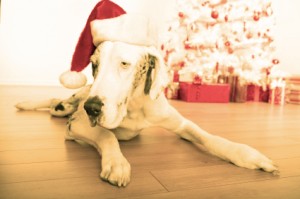 For a long minute we looked at each other, a look that banished the gulf that had separated us. In that moment Ted became my son. Then Penny, who was still at the window, squealed in a frenzy of delight.
“Daddy’s coming—Daddy’s coming, and he’s got Butch—he’s got Butch!”
Ted raced for the door, his body straining forward as though his heart ran ahead of him. Through a blur of glad tears I followed him.
“Merry Christmas, son!” I said. “Merry Christmas!”




 After starting out as a model and music video dancer, actor Channing Tatum shot to stardom as the star of Step Up, a classic high school romance set in the world of competitive dance that gave the unknown Tatum a chance to prove that he had more to offer. Continue reading
  THE WOMAN
 TruLOVE Collection Calendar.
 TruLOVE puzzle
 Oh, no! Scandal’s season has been cut back from 22 to 18 episodes. ABC announced that because of Scandal star Kerry Washington’s pregnancy — it’s making it more challenging to hide her baby bump – They will cut the season short.
  With her grace, sporty elegance and charming confidence, you’d never guess that Kate Middleton wasn’t a born royal. But to the millions of fans who love her, she’s considered “a natural” as Prince William’s wife. She was born into a family of self-made millionaire parents in Berkshire,England and never wanted for anything.
  Everyone’s favorite neighborhood web-head is back! Sony Pictures has just released the much anticipated first trailer for the new Spider-man movie starring Andrew Garfield, Emma Stone and Jamie Foxx as the evil Electro.